Red Apple Teacher Monogram: A Business Design Review
As a professional embroidery designer specializing in commercial merchandise and branded assets, I approach every machine embroidery design with a critical eye toward production viability and brand longevity. When evaluating the Red Apple Teacher Monogram for small business applications, my focus shifts beyond simple aesthetics to structural integrity, versatility across different substrates, and its potential to elevate brand identity. This review analyzes the design not just as a school-themed graphic, but as a functional asset for boutiques, creative studios, bakeries, and handmade brands seeking classic, recognizable merchandising.
First Impressions: Visual Personality and Professionalism
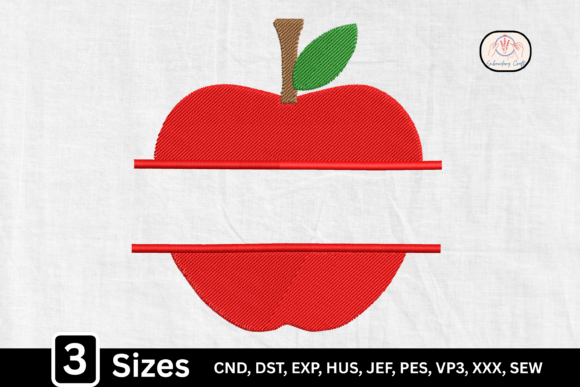
The immediate impression of the Red Apple Teacher Monogram is one of classic reliability and friendly professionalism. In the context of small business merch, this silhouette communicates warmth and tradition without feeling dated. The description highlights a "bold, crisp apple" that is divided, suggesting a split-design or blank name bar format. For a business owner, this negative space or designated monogram area is the most valuable real estate in the embroidery file. It transforms a generic clip-art image into a customizable branding tool.
Visually, the bold lines indicate a design that will read well from a distance, which is essential for staff uniforms or market stall signage. However, the term "crisp" in digital files can sometimes translate to high stitch density in physical production. As a designer, I look for clean vector paths that suggest efficient stitch routing rather than excessive fill stitches that could pucker lightweight fabrics. The aesthetic strikes a balance between playful and elegant, making it suitable for diverse industries ranging from florists and pet brands to local cafés and tutoring centers.
Commercial Applications Beyond the Classroom
While categorized under School, the Red Apple Teacher Monogram possesses significant crossover potential for general commercial embroidery. The apple shape is universally associated with knowledge, freshness, and care, allowing it to function effectively in various business sectors.
- Boutique and Retail Branding: Use the split-design feature to embroider the shop’s initials or founding year inside the apple. This creates a proprietary logo feel for hang tags, packaging accents, or shopping bags.
- Hospitality and Cafés: The red apple motif aligns perfectly with farm-to-table bakeries, juice bars, or cider houses. As an apron embroidery placement, it sits comfortably on the chest or pocket area without overwhelming the garment.
- Creative Studios and Florists: For businesses centered on growth and creativity, this design serves as a softer alternative to corporate logos. It works beautifully as a sleeve detail on work shirts or as a primary mark on canvas tote bag design projects.
- Event Merchandise: For workshops, retreats, or community markets, the blank name bar allows for personalization. You can stitch attendee names or specific event dates, increasing the perceived value of the finished product.
- Patch Production: The bold outline makes this an excellent candidate for creating standalone embroidered patch inventory. Patches offer flexibility for businesses that want to brand items like denim jackets or caps without direct embroidery risks.
Production Considerations and Technical Limitations
Despite its versatility, the Red Apple Teacher Monogram requires careful technical evaluation before mass production. Not all digital embroidery file formats behave identically across machines, and business merchandise demands durability.
Substrate Compatibility and Stabilizer Selection
The "bold" nature of the apple suggests substantial coverage. On structured items like caps or heavy canvas totes, this is advantageous. However, if applying this to lightweight performance wear or delicate boutique linens, the stitch density could cause distortion. Always pair this design with the appropriate stabilizer. For caps, use a firm tear-away; for stretchy knits or aprons, a cut-away mesh is often necessary to maintain the crisp shape of the apple after washing. Never assume a universal stabilizer works for all fabric texture types when producing client merchandise.
Sizing and Detail Integrity
When scaling down for cap embroidery or small sleeve logos, verify that the split-design section remains legible. If the monogram area becomes too narrow at smaller sizes, the lettering may pull or become unreadable. Test the minimum viable size before committing to a production run. Conversely, enlarging the design for tote bags may reveal gaps in the fill pattern if the original digitizing was optimized only for standard sizes. Check your hoop size capabilities and ensure the design scales proportionally without losing edge definition.
Thread Color and Contrast Strategy
For custom apparel on dark uniforms, a solid red apple might disappear against navy or maroon fabrics. Plan your thread colors strategically. Consider using a lighter shade of red, adding a white outline, or utilizing a metallic thread for the monogram section to ensure visibility. High contrast is non-negotiable for brand recognition on staff wear. Always test color combinations on actual garment scraps, as screen colors rarely match thread sheen accurately.
Impact on Brand Identity and Customer Trust
In the handmade and small business sector, presentation dictates perceived value. A poorly executed embroidery job signals amateurism, while a crisp, well-placed Red Apple Teacher Monogram reinforces attention to detail. When customers see consistent, high-quality branding on aprons, bags, and packaging, it builds subconscious trust. This design’s classic nature implies stability and heritage, which can be particularly beneficial for new businesses trying to establish authority.
Furthermore, utilizing a cohesive design asset across multiple touchpoints—from a printable mockup on your Etsy listing to the physical tag on the product—creates visual consistency. This repetition strengthens memory retention. For service-based businesses like tutors or therapists, the friendly yet professional tone of this apple design helps lower barriers to entry, making the brand feel accessible rather than clinical.
Essential Designer Notes for Business Implementation
Before adding the Red Apple Teacher Monogram to your commercial catalog, adhere to these professional best practices:
- Verify Commercial Licensing: Confirm that the embroidery file includes rights for selling finished merchandise. Some designs are restricted to personal use only. Protect your business by checking license terms explicitly.
- Conduct Black and White Tests: Run a test stitch in black thread on white fabric first. This removes color distraction and reveals true stitch quality, registration issues, or density problems that need editing.
- Create Client Mockups: Before stitching expensive inventory, generate a printable mockup showing the design on the intended product. Get client approval on size and placement to avoid costly rework.
- Audit Spacing and Kerning: If you add text to the blank name bar, manually adjust spacing. Auto-kerning in embroidery software often fails on curved shapes. Ensure letters do not crowd the apple’s edges.
- Compare Against Existing Assets: Place this design beside your current logos and fonts. Does it match your brand’s weight and style? Visual harmony across all design assets is crucial for a polished professional image.
- Test Wash Durability: Business merchandise gets laundered frequently. Wash and dry your test sample three times to ensure the stitch density holds up and the fabric doesn’t pucker around the dense apple sections.
The Red Apple Teacher Monogram offers a robust foundation for small business merchandise when approached with technical diligence. By respecting the interplay between digitizing quality, substrate choice, and brand strategy, this design can transition seamlessly from a school-themed graphic to a cornerstone of your commercial embroidery offerings. Always prioritize testing and licensing verification to ensure your handmade product line remains both profitable and professional.