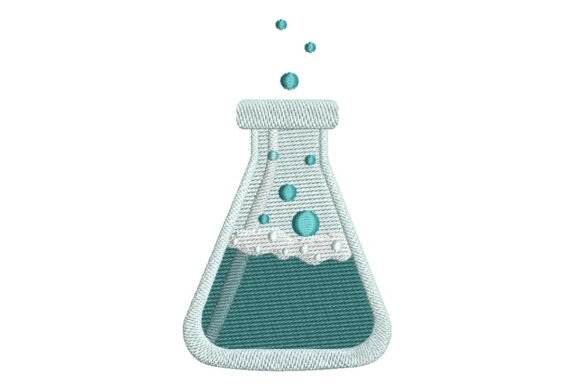
Bubbling Chemistry Flask: A Craft Fair Review
As I prepare my inventory for the upcoming weekend craft fair, I am constantly evaluating which machine embroidery design will actually convert foot traffic into sales. Booth space is limited, and every hoop loaded onto my machine needs to justify its production time. This week, I am reviewing the Bubbling Chemistry Flask for my Back To School and science-themed product lines. From a professional designer’s perspective, this motif offers specific advantages for handmade sellers, but it also requires careful execution to ensure the final embroidered patch or finished product looks premium rather than amateur.
First Impressions and Visual Hierarchy
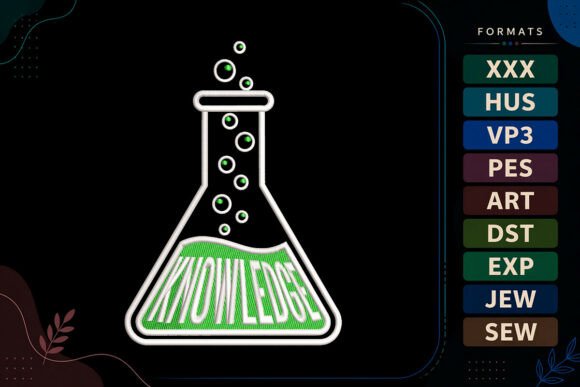
The immediate visual impact of the Bubbling Chemistry Flask is modern and playful without being childish. The Erlenmeyer flask silhouette is universally recognized, making it an instant read for customers scanning a crowded market table. The teal liquid provides a necessary pop of color that contrasts well against neutral backgrounds, while the bubbling effect adds dynamic movement to what could otherwise be a static image. For an Etsy seller or boutique maker, this balance is crucial. It feels appropriate for high school and college students, lab professionals, and science enthusiasts alike. It avoids the cartoonish aesthetic that often limits sales to younger demographics, positioning it as a versatile asset for commercial embroidery and small shop product lines.
Best Performing Products for Market Sales
Not every design translates equally across all blanks. Based on the geometry and stitch requirements of the Bubbling Chemistry Flask, I have identified specific items where this design excels in a retail environment.
- Tote Bags and Market Bags: This is arguably the strongest application. The vertical orientation of the flask fits perfectly in the center chest area of a canvas tote. As a tote bag design, it appeals to students carrying books or professionals transporting light gear. The teal thread stands out beautifully on natural cotton canvas.
- Apron Embroidery: For STEM educators or home bakers who love science puns, this design works exceptionally well on aprons. Placed on the upper bib or centered on the waist, it serves as a conversation starter. Ensure the apron fabric is smooth; heavy denim may obscure smaller bubble details.
- Embroidered Patches: Creating standalone patches allows for flexible pricing at craft fairs. Customers can buy them as impulse add-ons for backpacks or lab coats. The distinct outline of the flask makes for clean merrowed edges or satin stitch borders.
- Tea Towel Embroidery: While popular, tea towels require caution. If using flour sack towels, the design shines. However, textured waffle-weave towels may cause registration issues with the liquid fill. Stick to smooth fabrics for this specific motif to maintain clarity.
Production Practicality and Batch Efficiency
When preparing for a market, efficiency dictates profit margins. The Bubbling Chemistry Flask is generally conducive to batch production, provided you manage your stabilizer and hooping correctly. The shape is relatively compact, allowing for multi-hooping if your machine supports it. However, the liquid fill area requires attention. If the design uses a dense tatami fill for the teal liquid, production time increases significantly. I recommend checking the stitch density before committing to a large run. A lighter fill or a stylized outline approach for the bubbles can reduce stitch count while maintaining visual appeal, making the digital embroidery file more profitable for high-volume output.
Photographing this design for online listings is straightforward due to its high contrast. The teal against white or cream fabric photographs cleanly without extensive editing. For printable mockup creation, ensure the aspect ratio matches the actual hoop size to avoid misleading customers about the scale of the finished product.
Critical Technical Considerations for Makers
Even a beautiful embroidery file can fail if technical constraints are ignored. When testing the Bubbling Chemistry Flask, keep these practical notes in mind to protect your brand reputation and minimize waste.
- Fabric Texture Compatibility: The bubbling details are likely small. On thick or highly textured fabrics like terry cloth or fleece, these details will sink in and disappear. Always use a water-soluble topping when stitching on any surface that isn't perfectly smooth to keep the bubbles crisp.
- Stabilizer Selection: Because flasks often involve geometric lines combined with fluid fills, distortion is a risk. Use a high-quality cut-away stabilizer for stretchy knits or tote bags to prevent puckering around the glass outline. Tear-away may suffice for crisp woven cottons, but test first.
- Thread Color Matching: Teal is a complex color that shifts under different lighting. What looks vibrant on screen may appear dull in person. Verify your thread colors against the physical fabric in natural daylight before running a full production batch. Brand consistency relies on accurate color representation.
- Small Text Warning: If the design includes text like "Chemistry" or measurements on the flask, verify legibility at your intended size. Lettering below 4mm often becomes unreadable. If scaling down for a cap or pocket logo, consider removing internal text entirely.
- Curved Surface Challenges: Stitching this on caps requires specialized hooping and potentially a modified version of the design with reduced density. Do not assume a flat-design embroidery file will work on a curved cap brim without adjustment.
Designer Notes for Commercial Success
Before listing this as a handmade product or selling goods at a fair, professional due diligence is non-negotiable. Always run a sew-out on scrap fabric identical to your final blank. Inspect the spacing between the flask outline and the liquid fill; gaps indicate tension issues or digitizing flaws that need correction. Confirm the hoop size required matches your equipment capabilities; resizing a design by more than 10-15% can compromise stitch integrity.
Furthermore, review the licensing terms of the digital embroidery file. Just because you purchased the file does not automatically grant unlimited commercial rights for finished products. Clarify whether you can sell physical items at craft fairs or if there are quantity caps. Finally, create at least one real sample rather than relying solely on digital renderings. Customers at markets want to touch the texture and see the sheen of the thread. A tangible sample of the Bubbling Chemistry Flask on a quality tote bag builds trust far faster than a screen image ever could. By treating this design with professional scrutiny, you transform a simple graphic into a reliable revenue stream for your embroidery business.